Case Study
B2B Equipment Management Platform — Internal Tool for Poland Optical
Poland Optical, managing used and refurbished optical equipment, needed to replace manual inventory tracking with one product that could serve three audiences at once — internal staff, external clients, and operations. Built solo, end-to-end.
- Client
- Poland Optical
- Role
- Solo developer · end-to-end
- Type
- Internal B2B tool · private system
- Timeline
- 2026
The problem
Poland Optical manages used and refurbished optical equipment and had outgrown manual inventory tracking. The replacement had to serve three audiences with conflicting needs at the same time.
Internal staff
Role-based internal access to the full inventory and day-to-day operations.
External clients
A zero-login way to view and reserve devices, without ever creating an account.
Operations
Inventory that flows in automatically from the existing ERP, with no manual entry.
Built solo, end-to-end — from product decisions and data modelling through to UI, infrastructure, and deployment.
Core decision — dual-audience architecture
The defining decision was a dual-audience architecture: one product serving two completely different trust boundaries.
- Internal users (ADMIN / EMPLOYEE / VIEWER / TRADER) work in a full dashboard.
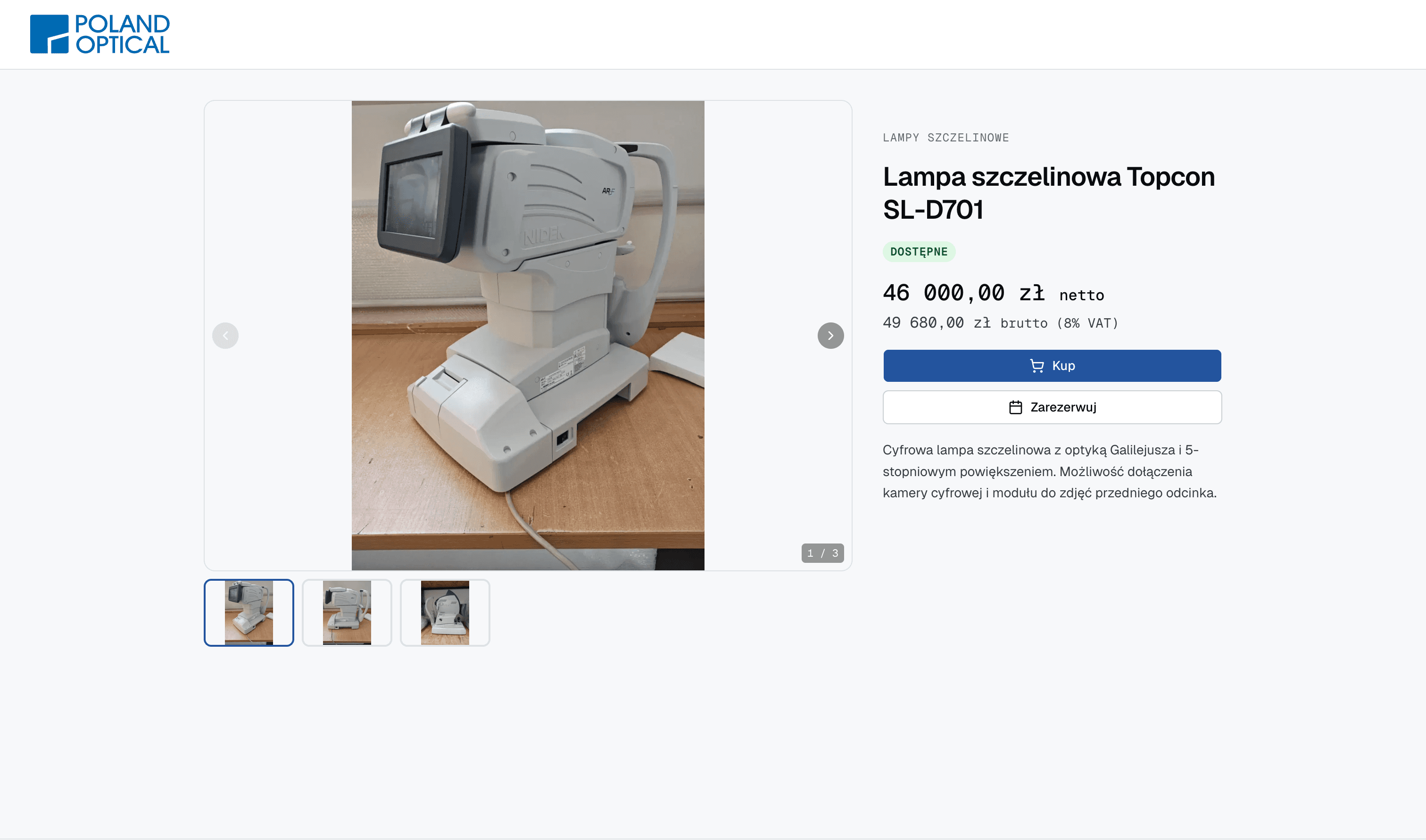
- External clients access a completely separate, auth-free, server-rendered surface via per-device share tokens — no account required.
- Share tokens are scoped per device, optionally password-protected (bcrypt), price-configurable, and QR-code distributable.
- Internal data is never exposed to external clients directly.
Why it matters
One product, two completely different trust boundaries — without duplicating the data layer.
What I built
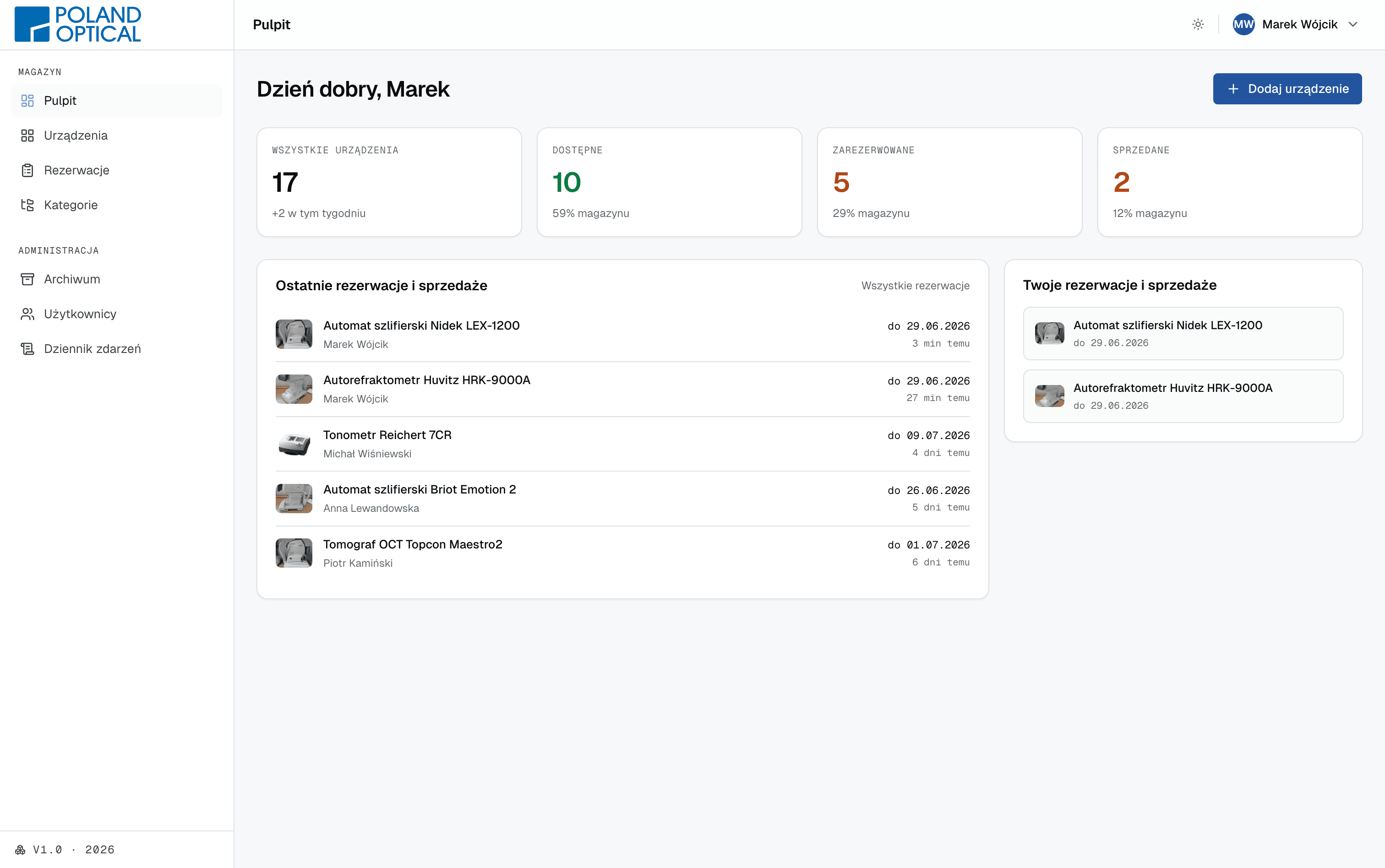
Role-based dashboard
Permission-driven access for ADMIN, EMPLOYEE, VIEWER and TRADER roles — driven by what each user can do, not rigid role guards.
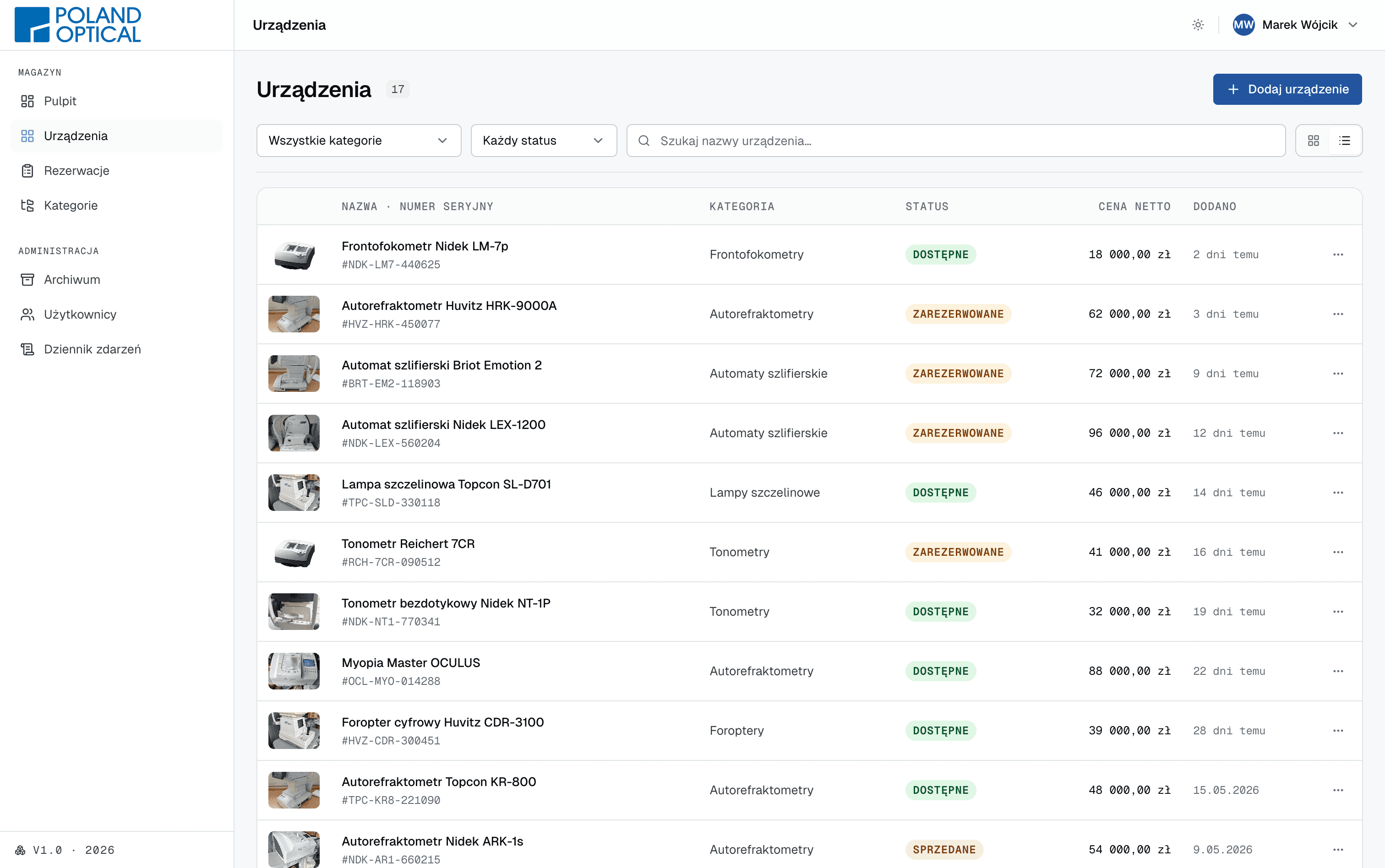
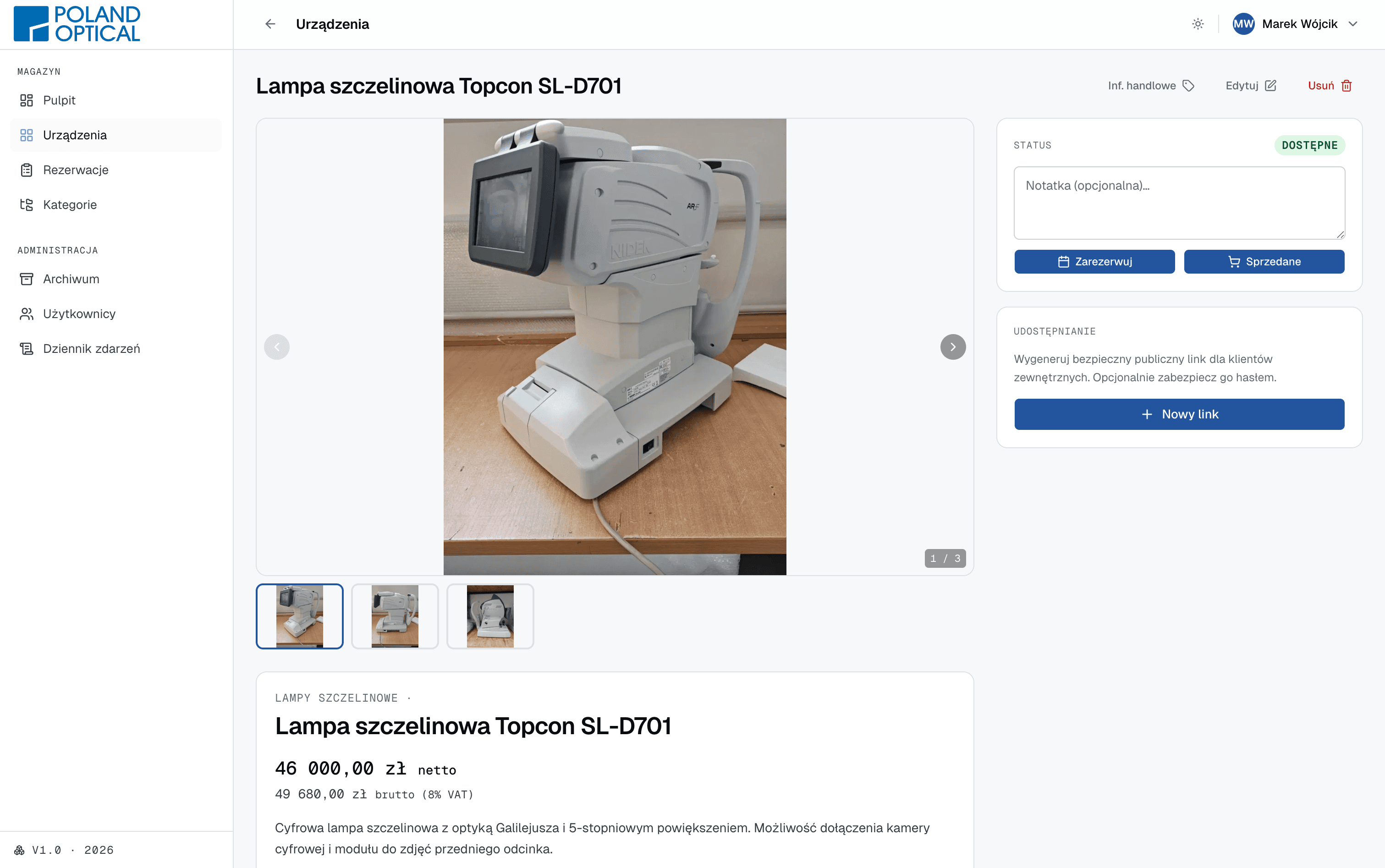
Device catalogue with media
Devices with images and video, organised into categories that respect per-role visibility.
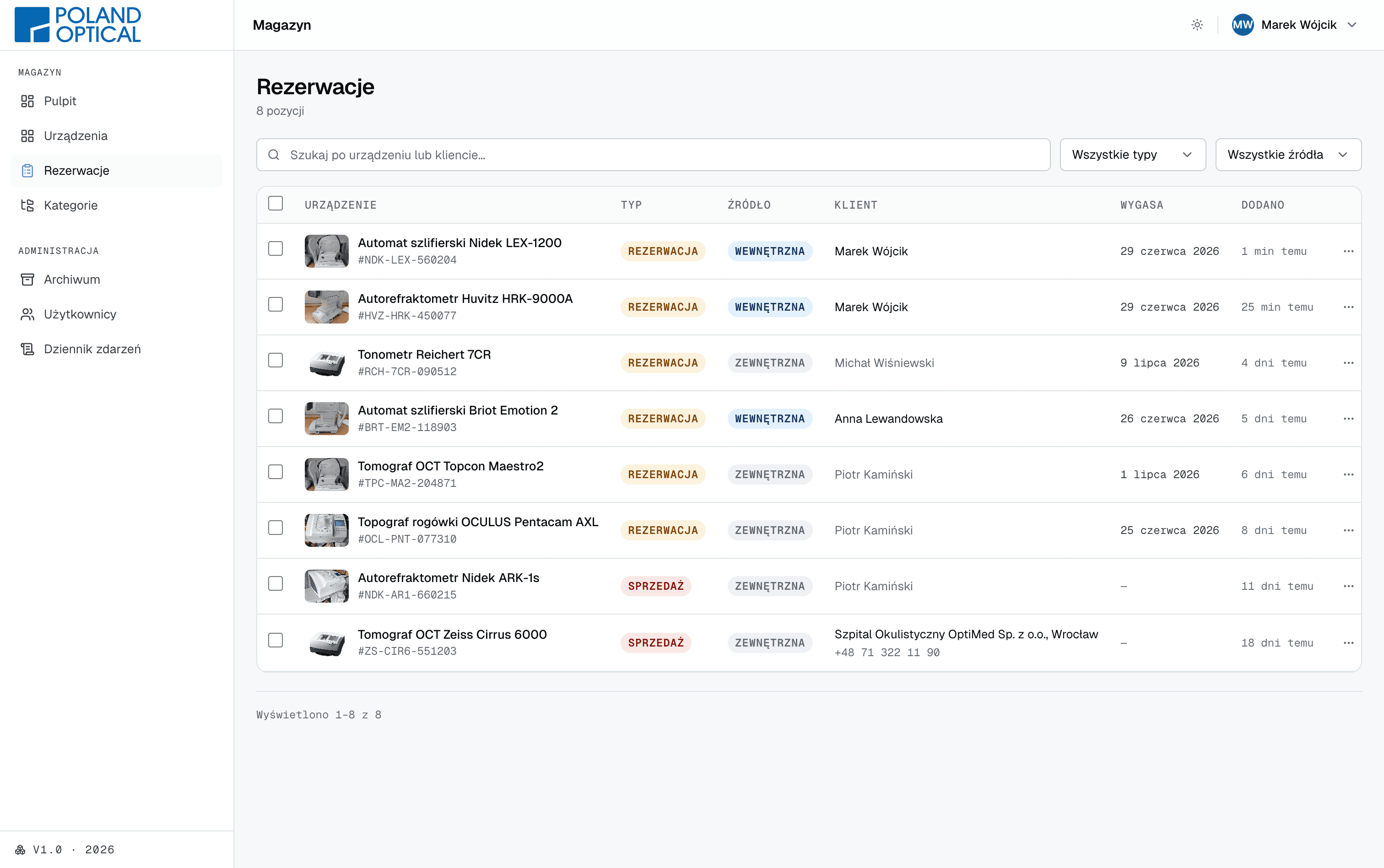
Reservation & purchase flow
A single flow for reserving or buying a device, usable internally or by external clients through a share link.
Automatic inventory sync
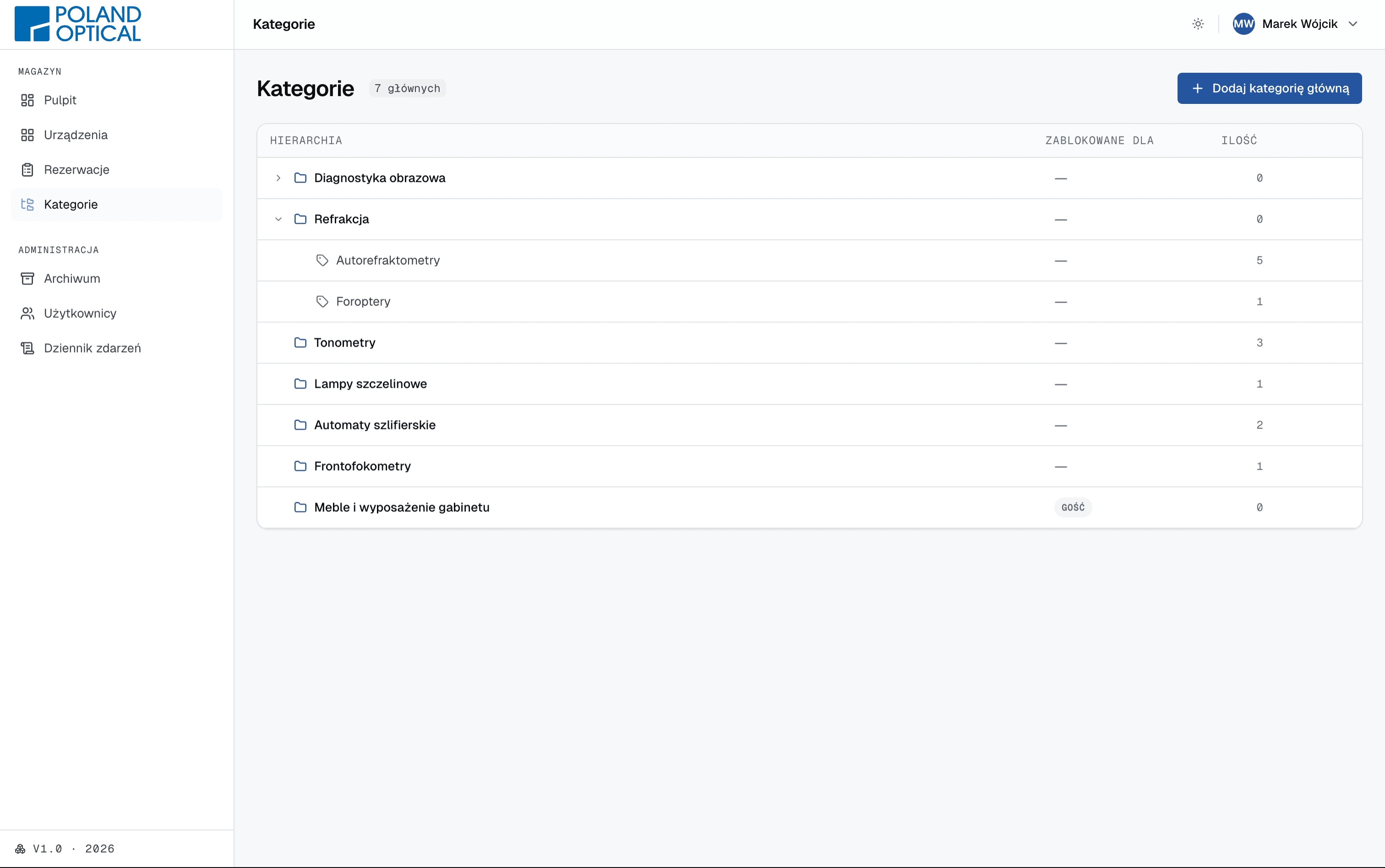
Devices update straight from the client's ERP (Enova) when stock changes or items sell — no manual entry.
Full audit log
Every create, update and delete is recorded — who, what and when — for accountability.
Soft delete + archive
Nothing is ever truly lost; records are archived rather than removed, and only admins can restore them.
Installable PWA
An installable progressive web app with push notifications wired to real events.
Share links & QR codes
Per-device share tokens — optionally password-protected and QR-code distributable — that open the auth-free client view.
Engineering decisions
End-to-end type safety with tRPC v11
Why: Zod schemas act as a single source of truth, shared between the API and the forms that feed it.
Outcome: No drift between backend and UI — a contract change surfaces at compile time, not in production.
Permissions as a typed const map
Why: Access is driven by a compile-time permission map rather than rigid role guards scattered through the code.
Outcome: The same source governs both API and UI, so what a user can see always matches what they can do.
Device status computed from reservations
Why: Availability is derived from reservation records instead of a separate, manually updated status field.
Outcome: Removed a whole class of sync bugs — status can never disagree with reality.
ERP webhook with dual-key matching
Why: Inbound updates must match on both enovaId and serialNumber; a mismatch is treated as a red flag, not an edge case.
Outcome: A mismatch intentionally blocks the action — a safety mechanism against acting on the wrong device.
Supabase Auth + Prisma, each owning its layer
Why: Supabase owns authentication and sessions; Prisma owns business data through type-safe relational queries.
Outcome: A clean split of concerns — security and domain logic can evolve independently.
Architecture
Internal staff and external clients reach the same app through two separate surfaces. The typed API layer is the only path to data — Prisma owns the business records in PostgreSQL, Supabase owns sessions and media, and the ERP pushes inventory in through a single inbound webhook.
Internal staff
ADMIN · EMPLOYEE · VIEWER · TRADER
via tRPC
External clients
No account required
via share token
Enova ERP
Stock & sales events
via webhook
Next.js App — App Router
tRPC v11 · typed API layer
Share-token surface
No auth · server-rendered
Prisma 7 → PostgreSQL
Business data
Supabase
Auth sessions · media storage
Stack
Screens